How to Reduce Nurse Turnover: Retention Strategies for Healthcare
Nurse turnover rarely comes from one workforce problem. A hospital may retain nurses successfully in one unit while another struggles with repeated resignations. Experienced nurses may remain in one facility but quit from another under similar market conditions.
Hospital-wide averages can hide those differences. Healthcare employers need to identify which nursing populations drive turnover and which signals shift first. They should also find where retention is already strong.
Leaders can then decide whether scheduling, management, workload, or career development needs attention. The analysis should also follow the full employee lifecycle. Retention signals can begin before hire and shift during onboarding. They grow clearer as resignation approaches.
Healthcare staff retention also carries a direct staffing and financial cost. Heavy reliance on travel nurses becomes expensive when preventable local turnover continues. Retention analysis should determine whether local nurse attrition is creating avoidable replacement costs.
Nurse Turnover Varies by Unit, Facility, and Role
Hospitals employ nurses across different environments. ICU, emergency, inpatient, outpatient, and specialty groups can experience the same employer in different ways. Retention can also vary by:
- Facility
- Manager
- Unit
- Tenure
- Age
- Role
- Employment type
- Specialty
A hospital-wide score may conceal a serious issue in one population. Travel nurses solve immediate coverage needs. Repeated reliance on them may also hide a local retention problem. The employer should compare units where nurses quit with units where nurses stay. That comparison can reveal whether manager relationships, scheduling, career visibility, team connectedness, or another experience differs materially.
Why Nurse Retention Requires Continuous Listening
Annual surveys provide useful information, but nurse experiences can change quickly. Several events can alter workforce sentiment between survey cycles:
- Leadership changes
- Staffing changes
- Higher patient demand
- Schedule changes
- Administrative changes
- Team conflicts
- Organizational restructuring
One annual score may miss those shifts. A single engagement measure also cannot capture the full nurse experience. Commitment may fall while trust stays stable. Manager relationships may remain strong while schedule concerns rise.
Continuous listening gives healthcare employers a way to track those changes over time. The goal is enough consistent data to separate a temporary dip from a meaningful retention signal.
What Makes Nurses Quit?
Healthcare employers often know the broad categories connected to nurse turnover. Common possibilities include:
- Workload
- Burnout
- Scheduling
- Manager relationships
- Recognition
- Career growth
- Trust
- Connectedness
- Administrative burden
- Staffing pressure
These categories should remain hypotheses until the employer measures them. Burnout illustrates the problem, since the term can cover several causes. One nurse may face repeated overtime, while another lacks manager support. Another may struggle with administrative burden.
The diagnosis should identify what produces that experience. Nurse retention strategies should connect these signals with turnover data before leaders select an intervention.
1. Measure Commitment From Pre-Hire Through Post-Separation
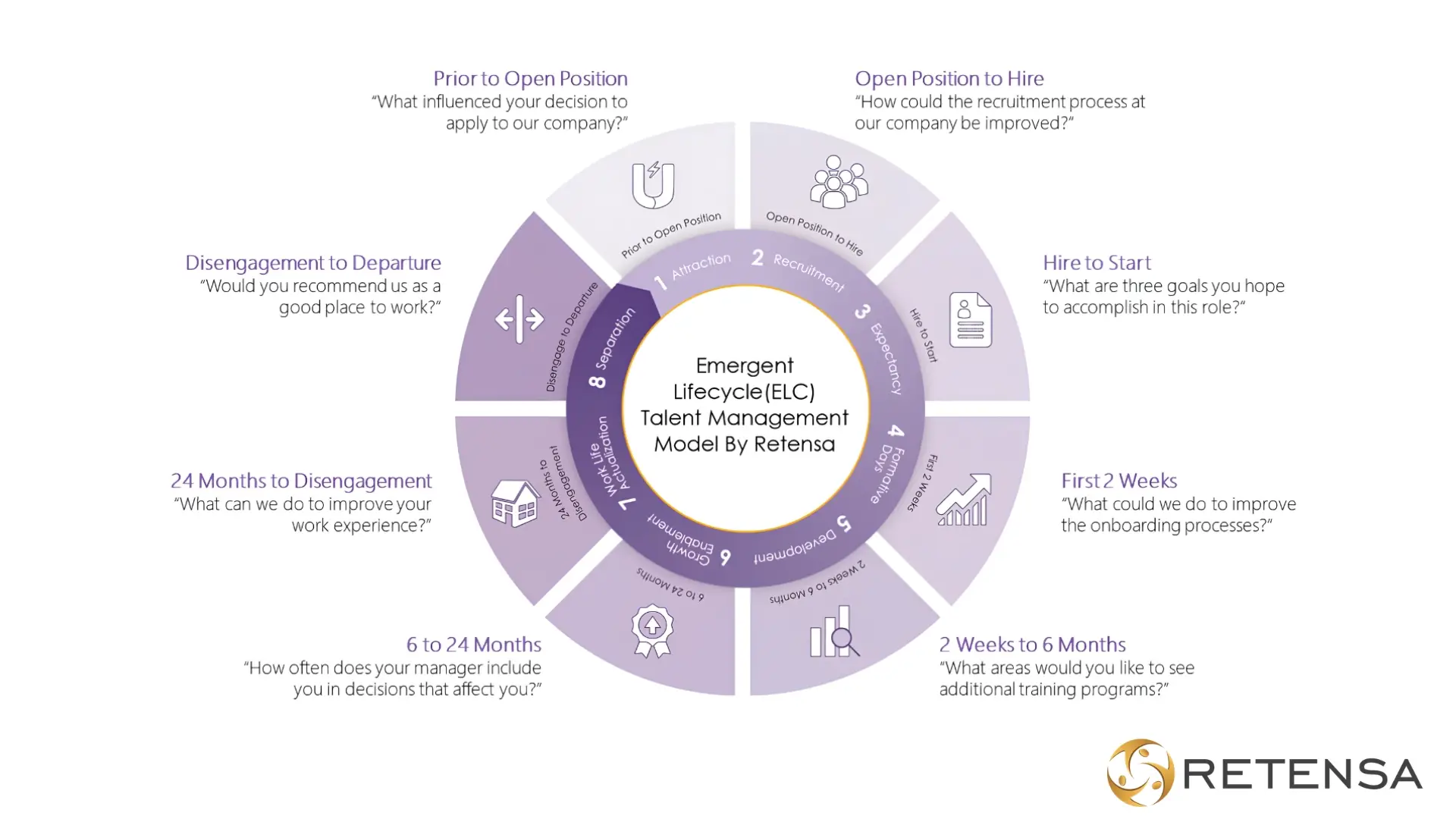
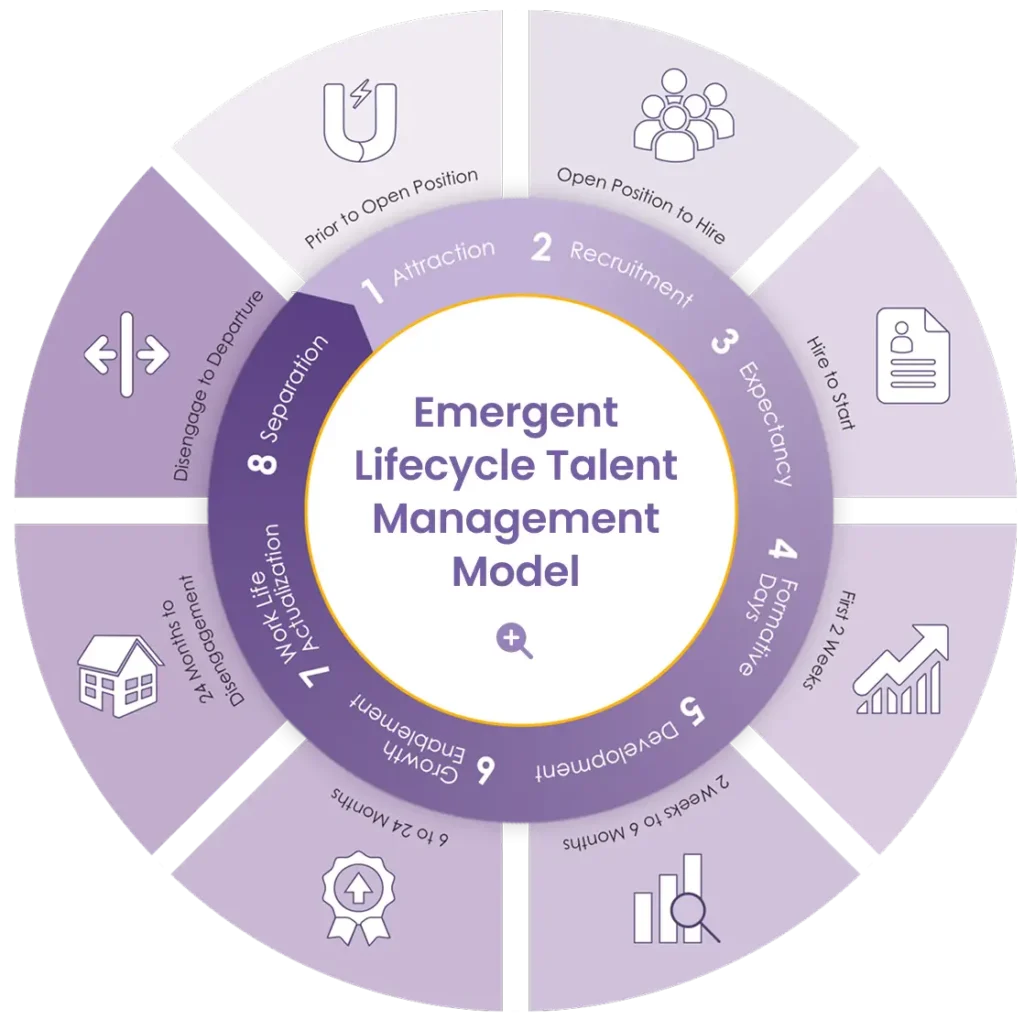
Retention begins before the employee’s first day. Healthcare employers can collect useful information across several stages:
Pre-hire: Why did the nurse choose the employer?
Onboarding: Did the workplace match recruiting expectations?
Active employment: How are commitment, trust, connectedness, and turnover intention changing?
Resignation: Which factors contributed to the decision to quit?
Post-separation: Which patterns repeat across completed departures?
This lifecycle analysis can reveal where the relationship begins to weaken. A nurse may join for schedule flexibility, then find a different schedule in practice. Another may join because of career opportunity and later report weak advancement visibility. These patterns connect recruitment and retention. Persistent early attrition can therefore indicate a problem in the talent pipeline as well as the employee experience.
2. Compare Nursing Units, Managers, and Employee Groups
Hospital-wide turnover can hide local retention problems. Healthcare employers should compare relevant measures across units and workforce populations, including:
- Voluntary turnover
- Retention
- Commitment
- Manager trust
- Connectedness
- Appreciation
- eNPS
- Turnover intention
- Tenure
- Role
Keep the strongest units in the analysis, since a high-retention unit provides an internal benchmark. HR can compare its manager relationships and career visibility with higher-attrition units.
This creates a strengths-first approach. The employer learns what already works before adding another retention initiative.
3. Connect Burnout and Workload Signals to Turnover Data
Burnout should trigger deeper analysis. Healthcare employers can compare employee feedback with:
- Overtime
- Absenteeism
- Workload concerns
- Administrative burden
- Staffing pressure
- Patient demand
- Turnover intention
- Voluntary turnover
The objective is to understand whether these signals move together. Two units may face similar staffing pressure while producing very different retention outcomes. One may have stronger manager support or team connectedness.
That comparison helps HR look past “burnout” to the cause beneath it. When workload concerns, falling manager trust, and exit feedback align, the case for action strengthens.
4. Measure Trust, Connectedness, and Appreciation
Nurses experience the employer through relationships as much as policies. Trust can exist at several levels:
- Employee to manager
- Employee to senior leadership
- Employee to employer
- Employee to team
Connectedness shows how integrated nurses feel with colleagues. Appreciation shows whether nurses feel their work receives consistent recognition.
The strongest analysis compares these measures across units and managers. A unit with high appreciation and low turnover may provide a model worth studying. Another with declining trust and rising turnover intention may require earlier attention. These signals carry more weight once HR links them to retention outcomes.
5. Identify Scheduling Concerns Through Employee Feedback
Many hospitals link shift patterns to nurse turnover, though the specific issue differs by population. Healthcare employers should examine:
- Schedule predictability
- Overtime
- Shift changes
- Flexibility
- Shift preference
- Schedule control
- Repeated scheduling concerns in feedback
The employer should then compare these measures with voluntary turnover and exit data. A scheduling concern that appears across current-employee feedback and completed departures deserves greater priority.
A comparable unit with similar scheduling practices and stronger retention suggests that another factor may be contributing. Retensa’s role remains diagnostic. The analysis should prove whether scheduling contributes to attrition before the employer invests in a scheduling solution.
6. Track Career Visibility as a Retention Signal
Nurses may want to understand how they can progress without quitting the employer. Career progression can include:
- Clinical specialization
- Certifications
- Education
- Advanced practice pathways
- Leadership roles
- Internal mobility
- Management opportunities
Those opportunities must also be visible. A healthcare employer may offer several programs that nurses rarely understand or use. Nurses stay when they can see their own future with the employer.
Internal mobility data can provide additional context. A facility that promotes nurses more often may also retain them longer. That link deserves closer study. HR should keep measuring career visibility until the data shows how strongly it affects nurse attrition.
7. Use Exit Data to Confirm Why Nurses Quit
Current and former employees provide different information. Current-employee data shows emerging conditions, while exit data confirms what drove the departure. The strongest diagnosis connects both. Structured exit analysis can compare recurring reasons across:
- Units
- Managers
- Facilities
- Tenure groups
- Roles
- Employee populations
Suppose manager trust declines in one nursing unit several months before turnover rises. Exit interviews later identify manager communication as a repeated concern. The two datasets now support the same interpretation. ExitPro and Raeya AI can contribute to this analysis where approved. The goal is to place the exit event within the nurse’s broader employment history.
8. Turn Findings Into Unit-Level Retention Actions
Different nursing units may need different interventions. One unit may need a manager-level response, while another may need a scheduling change. Another may need clearer career communication or a review of recruiting expectations. The action plan should identify:
- The affected population
- The retention signal
- The confirmed cause
- The priority intervention
- The result to measure
This plan targets each unit more precisely than a hospital-wide initiative. Experienced nurses planning to quit need a different response from new hires quitting in onboarding. Match each intervention to the diagnosed population.
Build a Nurse Retention Program Around Strengths
Retention analysis should study why nurses stay as carefully as it studies why they quit. Healthcare employers can examine what motivates nurses to:
- Join
- Stay
- Develop
- Recommend the employer
- Remain through periods of pressure
High-retention units provide useful internal evidence. One manager may build stronger trust while another unit explains advancement more clearly. These strengths can become part of the nurse retention programs. The employer should then connect those findings with measurable signals such as commitment, eNPS, manager effectiveness, trust, connectedness, turnover intention, and voluntary turnover. This approach uses existing success as part of the solution.
Compare Travel Nurse Dependence With Local Retention Investment
Travel nurses provide necessary staffing flexibility in many healthcare settings. The financial question becomes more important when temporary staffing repeatedly compensates for avoidable local turnover. Healthcare employers can compare:
- Travel nurse spend
- Vacancy cost
- Recruiting expense
- Onboarding cost
- Overtime
- Reduce nurse turnover
- Retention investment
Temporary staffing still has a place. The employer should determine whether preventable local attrition creates unnecessary reliance on external labor. Stronger retention can recover part of that cost when nurses quit for fixable reasons. Calculate the exact opportunity from the employer’s own workforce and staffing model.
How Employer Size Should Affect Rollout
Large health systems may benefit from a controlled pilot. A pilot can focus on:
- One facility
- One nursing unit
- Several comparable units
- A high-turnover population
- A High Value clinical group
The employer can test data quality, manager response, employee participation, and intervention effectiveness before expansion. Smaller healthcare employers may benefit from a broader workforce dataset from the beginning. Narrow segmentation may reduce the available sample too far. The rollout should reflect workforce size, structure, and available data.
How Retensa Approaches Healthcare Retention
Retensa applies a full employee lifecycle approach to understand why employees join, stay or quit.
TalentPulse AI measures commitment drivers across relevant employee populations. Healthcare employers can compare departments, managers, roles, demographics, facilities, and other workforce groups.
Raeya AI maps sentiment polarity and intensity to traceable outcomes. Retensa can then track when nurse perceptions shift and where those shifts connect to turnover.
The analysis can begin before recruitment and continue through post-separation. That lifecycle view helps separate a recruiting mismatch from an active-retention problem.
Retensa also studies the employer’s strengths. High-retention units reveal practices worth preserving and extending. Lower-retention populations show where to target intervention.
The final plan reflects the employer’s industry, geography, headcount, current turnover rate, and target nursing population. Retensa reports a 98% success rate across 19 industry verticals and 25 years of retention work. The company backs the plan with a contract-backed retention guarantee. Employers pay nothing if voluntary turnover does not decrease against the agreed target.
Frequently Asked Questions
What are the most important nurse retention strategies?
The right strategy depends on the confirmed cause of turnover. Healthcare employers should first compare retention by unit, manager, tenure, role, and employee population before selecting an intervention.
Why do nurses quit?
Nurse turnover can involve workload, scheduling, manager relationships, trust, recognition, career visibility, administrative burden, staffing conditions, or another workforce factor. Broad terms such as burnout require deeper diagnosis.
How can healthcare employers reduce nurse turnover?
Employers can set a turnover baseline, segment nursing populations, and track retention signals over time. They can then compare strong and weak units and act on the strongest confirmed driver.
How does management influence nurse retention?
Manager relationships can affect trust, connectedness, appreciation, communication, and commitment. Healthcare employers should compare these signals across units before deciding whether management is a primary retention driver.
Does burnout cause nurse turnover?
Burnout can accompany turnover, but the term may describe several underlying problems. Workload, overtime, scheduling, manager support, administrative burden, or staffing pressure may contribute to the experience.
Can scheduling improve nurse retention?
Shift patterns may influence retention when nurses report unpredictable hours, overtime, or late changes. Employers should check scheduling feedback against attrition before selecting an intervention.
Why should healthcare employers analyze nurses who stay?
High-retention nursing units can reveal manager practices and workplace strengths that other units can adopt.
How can exit interviews improve nurse retention?
Structured exit data can reveal recurring reasons nurses quit. That data carries more weight when HR compares it with earlier sentiment, manager signals, and turnover intention.
How should a hospital measure a nurse retention program?
Hospitals can track voluntary turnover, retention by nursing population, commitment, trust, and turnover intention. The primary measure should connect to the agreed retention target.
How does Retensa support nurse retention?
Retensa uses full-lifecycle workforce analysis, Talent Pulse AI, Raeya AI, and exit analysis to build an employer-specific plan. Each plan ties to a voluntary-turnover reduction target and a contract-backed retention guarantee.