Best Employee Retention Software in 2026: A Buyer’s Guide
Employee retention remains one of the top 5 business priorities in 2026. Hiring costs keep climbing. Employee expectations now include more flexibility, faster career growth, and stronger recognition. With a shrinking labor pool in many industries, skilled talent costs 10x more to replace than to retain. Employee retention software gives HR teams a way to act on that pressure early.
Employee replacement costs more than most employers calculate. A replacement takes months to recruit, screen, and train. The employer pays twice. Direct hiring costs come first. Lost productivity follows while the new hire ramps up. Employers lose institutional knowledge, customer relationships, and team morale on top of that.
More employers now invest in employee retention software to replace reactive HR strategies. These tools started as basic pulse surveys. They now span exit analytics, predictive risk scoring, HR strategy planning and manager coaching. Each tool surfaces a different retention signal, from declining engagement to elevated turnover risk.
As platforms compete in this category, survey, recognition, and predictive analytics platforms often overlap, which makes direct comparison difficult. Some tools focus on engagement surveys but label it as retention. Other tools facilitate recognition, but don’t capture real-time employee experiences. Then some BI tools do predictive analytics, but cannot actionize findings. Only a few combine all three components into a true comprehensive “employee retention platform”.
This buyer’s guide defines employee retention software and the features that matter in 2026. Later sections cover vendor comparison and what separates a strong purchase from a costly one. Use it to choose the right employee retention solution for your team.
What Is Employee Retention Software?
Employee retention software is technology built to strengthen employee experiences that reduce voluntary turnover. The category covers continuous insights, engagement tracking, recognition, communication, and predictive analytics.
These platforms surface warning signs weeks before a resignation. This is the key distinction, and not all retention solutions do it.
Modern retention software gathers data from multiple sources, including:
- Employee surveys
- Pulse surveys
- Open-ended forums
- Manager feedback
- Recognition activity
- Performance management
- Career development participation
- Workforce metadata
- Internal mobility
- Communication patterns
- Labor market data
- Employee sentiment
- Exit interview analysis
The software combines all of these signals to provide a clearer picture of workforce health.
HR teams get measurable insights instead of assumptions. HR teams can compare retention signals across departments and identify where intervention is needed.
Why Employee Retention Software Matters More Than Ever
Flexible work arrangements and changing employee expectations have made retention harder. Skills shortages and stronger competition for talent add further pressure.
Employees now expect:
- Frequent feedback
- Career development opportunities
- Meaningful recognition
- Transparent communication
- Work-life balance
- Better leadership
- Growth opportunities
- Personalized employee experiences
Traditional annual surveys no longer provide enough visibility. Too deep and too irregular. By the time organizations identify a disengaged employee, it is too late.
Employee retention software monitors sentiment continuously. Good retention solutions flag patterns before they turn into problems. They trigger responses to problems before those turn into resignations.
For HR leaders, this means:
- Better workforce planning
- Lower recruitment costs
- Higher employee morale
- Improved productivity
- Better manager accountability
- Stronger company culture
Key Features to Look for in Employee Retention Software
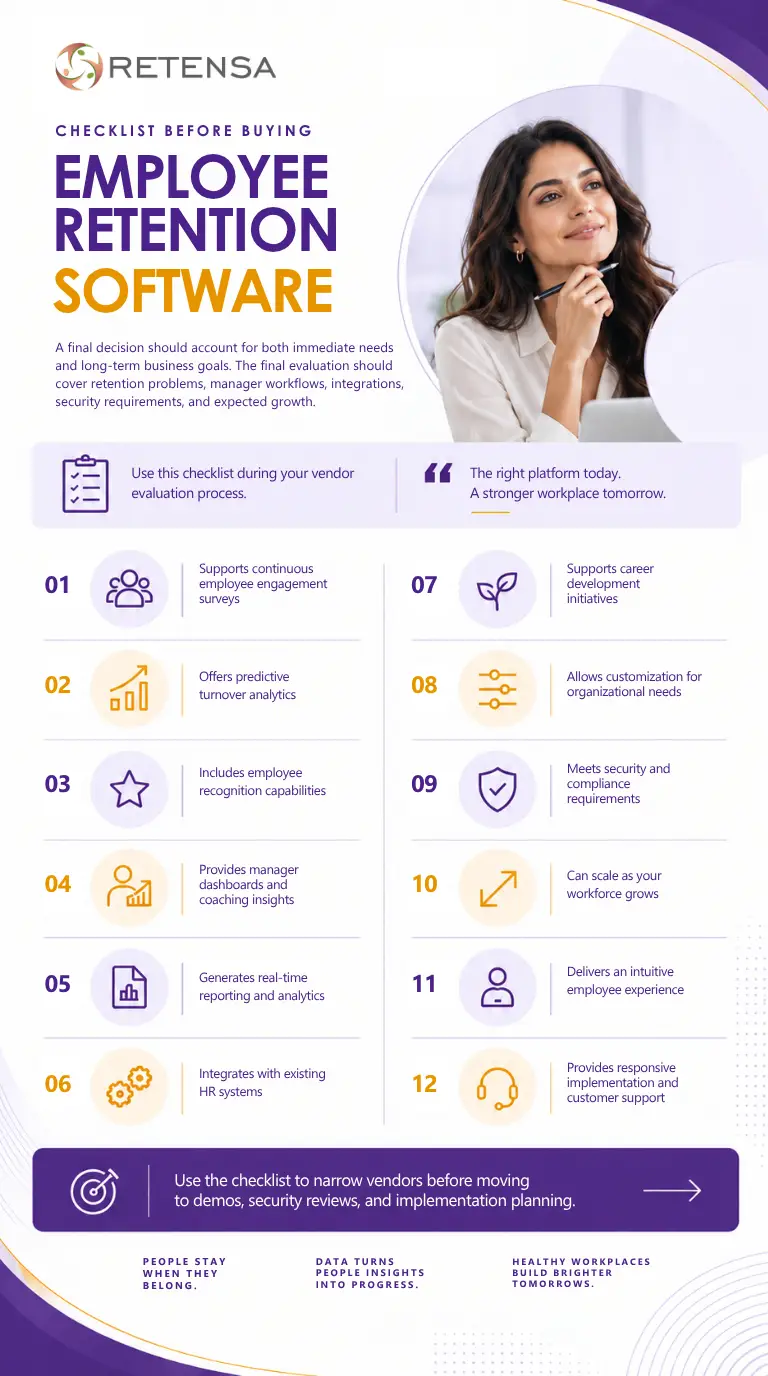
Not every platform offers the same capabilities. Some solutions focus only on engagement surveys, while others provide an integrated retention ecosystem. To find the best fit, evaluate the following features first:
1. Employee Feedback / Pulse Surveys
Only regularly pulsed staff feedback helps HR teams track changes in employee sentiment over time. It’s those changes that form the foundation of prediction. The best platforms in this category reach across multiple avenues to capture organizational opinion:
- Pulse surveys
- Employee Lifecycle surveys
- Confidential/Anonymous feedback
- eSuggestion Boxes
- Department-specific surveys
- Employee Net Promoter Score (eNPS)
- Automated scheduling
- Exit Interviews
- Benchmark reporting
Anything less than the above, reduces the chance that the employee retention software will succeed at the next step, predicting turnover.
2. Predictive Turnover Analytics
Predictive analytics adds forward-looking risk signals to traditional eNPS reporting. These models flag turnover risk before it appears in resignation numbers.
The models weigh declining commitment, polarity and intensity of sentiment, reduced participation, and manager interactions. Performance changes, tenure, promotion history, and recognition frequency feed the same model. The model can then surface employees or groups with elevated retention risk. The quality of this model is paramount to accuracy. Newer tools do not have the depth of considerations that influence behavior over time. For any provider, ask:
1- How long have you been predicting turnover?
Longer is better to avoid false positives or missing trust signals that have outsized influence
2- How do you calibrate your models to our organization?
Anything that ships “as-is” may be wrong for months!
The best models DON’T make assumptions, they train on your actual HR data overlayed with industry baselines
3- What is your 90-day turnover accuracy rate?
- If they don’t have an answer with supporting data…walk away.
With the right models in place, alerts trigger HR teams to individual, team or departmental trends, who can intervene while there is still time to change the outcome.
3. Manager & Peer Feedback
Good retention software helps HR teams track whether relationships are consistent across managers, departments, and employee groups. Recognition features in employee retention software makes respect, connectedness, appreciation, and trust visible and consistent. Manager and co-workers can give and receive this feedback with:
- Peer-to-peer recognition
- Upwards Evaluations
- Staff 360 Degree Surveys
- Manager 360 Degree Surveys
- Milestone communication
- Digital appreciation walls
- Company-wide announcements
4. Manager Effectiveness Dashboards
Manager-level dashboards show where downline connectedness, appreciation, trust, or loyalty differs across teams. Dashboards give managers visibility into their own downline and direct reports. These dashboards typically show:
- Team engagement
- Recognition activity
- Survey participation
- Feedback trends
- Risk indicators
- Coaching opportunities
Managers can review team-level signals and identify follow-up actions from the dashboard.
5. Action Planning
Collected feedback means nothing without a next step. Good retention software turns employee feedback into assigned owners and deadlines. Managers use it to:
- Assign action items
- Track progress
- Monitor improvements
- Review outcomes
- Measure impact
Survey participation drops when employers skip this step. Employees stop answering surveys when nothing changes.
6. Real-Time Reporting
A quarterly report is too slow for most retention problems. Real-time reporting pulls commitment dashboards, heat maps, and department comparisons into one place. The same view covers manager-level detail, executive summaries, historical trends, and retention metrics.
Leadership can review turnover, eNPS, and manager-level trends from the same reporting view.
Employee Retention Software vs Traditional HR Software
Many organizations assume their HRIS already handles retention. In reality, traditional HR systems primarily manage administrative processes.
| Traditional HRIS | Employee Retention Software |
| Payroll | Engagement measurement |
| Attendance | Predictive turnover analytics |
| Leave management | Employee recognition |
| Employee records | Pulse surveys |
| Compliance | Manager coaching insights |
| Benefits administration | Retention risk analysis |
| Recruitment workflows | Culture and connectedness reporting |
An HRIS stores employee information. An employee retention platform aggregates the constellation of data around an individual to determine variance with the crowd. Good retention software highlights how to improve all employee experiences and reduce turnover in specific locations, titles, departments or regions.
Signs Your Organization Needs Employee Retention Software
The cost to improve gets higher when employers wait until turnover becomes a major issue. The “Undertow Effect” is a real-world phenomenon that perpetuates the turnover cycle. As employees quit, the people that remain develop cultural norms like “nobody stays here” or “things are better somewhere else”. As more employees quit, the actions compound to signal to others to go with them. However, early warning signs appeared months earlier. From 82% to 86% of turnover is preventable.
Common indicators to choose an employee retention company include:
- Increasing voluntary resignations
- High proportion of involuntary terminations (>5% of total)
- Declining employee engagement
- Low survey participation (Less than 80% completion rate)
- Poor manager feedback
- Recruitment time-to-hire or time-to-fill delays
- Difficulty retaining top performers (>10% of total separations)
- Limited visibility into employee sentiment
- High cost of employee turnover
Several signals together may indicate a need for retention analysis beyond the organization’s existing HRIS.
Questions Buyers Should Ask Before Choosing Software
Every organization has unique retention challenges. Before evaluating staff retention vendors, HR leaders can answer several internal questions.
What Is Our Ideal Employee Turnover / Employee Retention Rate?
Unearthing the root cause of turnover is achievable with software. However, initiating the change may need an experienced employee retention expert to guide implementation. If you are currently higher than industry average and aim for average staff attrition rate, it’s a different approach than starting at or below average and reducing it further.
Who Will Use the Software?
Consider all stakeholders. The type and number of users will inform the best solution, relevant options, rollout communication and likely the total cost. Is this intended for:
- HR
- Employees
- Managers
- Department leaders
- Executives
- Domestic locations or international sites
- Foreign language speakers
- Online or Mobile users
Managers and HR require the finest tuning of tools and capabilities.
Which Metrics Matter Most?
Employee Retention KPIs inform progress toward the ideal retention state. Good retention software can track, monitor and trend a spectrum of HR metrics that include:
- Retention rate
- Engagement score
- Commitment score
- Connectedness levels
- Appreciation levels
- Loyalty intention
- Trust (multi-directional)
- eNPS score
- Voluntary turnover
- Involuntary turnover
- Manager effectiveness
- Employee satisfaction
- Recognition participation
- Survey completion
- Statistical representation of responses
- Turnover intention at 30/60/90/180 Days
A platform that misses too many KPI’s can delay your ability to pinpoint root causes.
Employee Retention Software Comparison: What Separates the Best Platforms?
A quick retention software comparison often reveals that many platforms promise similar outcomes. Nearly every vendor claims to improve engagement, reduce turnover, and create a better employee experience. Differences emerge in how each platform achieves them. The degree of integration, automation, and fit with your long-term goals, budget, and existing HR resources influence the right choice.
It also helps for buyers to evaluate what happens after the platform identifies a retention problem. A feedback-only tool leaves the analysis to HR. Analytics, manager coaching tools, and action planning close that gap. The most effective employee retention software combines data collection with practical recommendations.
The table below compares the areas that matter most during evaluation.
| Key Evaluation Criteria | Typical HRIS Tool | Standard Survey Software | Comprehensive Employee Retention Platform |
| eNPS surveys | Limited | Yes | Yes |
| Pulse surveys | No | Yes | Yes |
| Predictive turnover analytics | No | Limited | Advanced |
| Employee recognition | Rare | Common | Common |
| Action planning | Rare | Common | Common |
| Executive dashboards | Limited | Basic | Advanced |
| AI-trained Retention Expertise | No | No | Yes |
| Reporting Insights | Basic | Moderate | Advanced |
| Customization | Limited | Moderate | Extensive |
| Integration with other HR systems | Moderate | Moderate | Extensive |
Growth adds departments, managers, locations, and employee groups that HR teams need to analyze separately. A single retention platform reduces the need for multiple disconnected tools. Consolidation gives HR leaders one view of workforce health.
Essential Criteria for Choosing Employee Retention Software
The best software solves your organization’s retention challenge where it is today, and monitors changes that you implement tomorrow. It is worth looking at feature checkboxes to compare, but depth of provider experience makes up for any single function. Solutions are most likely to succeed when they are:
1. Easy to Use
Even the most advanced platform will struggle to deliver value if employees avoid using it. A clean interface reduces the steps required to complete surveys, give recognition, or submit feedback. Surveys, recognition programs, and feedback initiatives all depend on it.
Managers benefit from software that presents insights clearly. Clear dashboards remove the interpretation work. Good software lets them review the signal and assign a follow-up action.
2. Scalable
Your workforce today may look very different in two or three years. The software should support organizational growth without requiring a complete replacement.
Scalable talent retention software adapts to new departments, office locations, and hybrid work environments. Larger employee populations run on the same platform without losing performance or usability.
3. Secure and Compliant
Employee feedback often includes sensitive information. Data protection is essential for trust and for regulatory requirements.
Look for vendors that provide encryption, role-based access controls, and secure data storage. Vendors should also document compliance with relevant privacy regulations. Employees share honest feedback when they trust how the employer handles it.
4. Customizable
Every organization has a unique culture and different retention priorities. Software should let HR teams customize surveys, recognition programs, reporting dashboards, workflows, and communication templates.
Flexible platforms adapt as business priorities change, without disrupting employee participation.
5. AI-Trained Retention Models
At this point, every software slaps “AI” on some page and makes bold claims.
But what is the AI doing?
And how was the algorithm trained to predict and prevent turnover?
If the provider cannot credibly represent 5+ years of historical testing and modeling…it’s just guessing. The dynamic landscape of employer/manager/leader relationships, labor market conditions, and cross-cultural implication are far too complex for “off-the-shelf” retail AI to get right. The only system that will work in the future is one with a track record of success across geographies and industries to establish baselines based on real “signals” and impervious to “noise”.
6. Integration-Friendly
Retention software should fit naturally into your existing HR technology stack. Integrations with HRIS platforms, payroll systems, and communication tools reduce duplicate work. Connections to learning management and collaboration platforms improve data accuracy further.
When systems communicate with each other, HR teams spend less time on administrative tasks. They spend more time acting on employee insights.
What Determines Long-Term Software Value
The right retention software is like insurance on your payroll investment. Spending $5 million, $10 million, $20 million or more on total compensation?
What revenue are you getting from that investment?
Employee retention software protects the income you rely on every day. It ensures the people are in place and performing at the highest level. The savings from reduced cost of staff turnover far outweigh the charges. So keep in mind that:
Value Outweighs Sticker Price
Lower-cost software can create expenses later if it lacks core functionality. Employers may need separate survey tools, recognition platforms, or export to manual analytics solutions to fill the gaps. A stronger evaluation looks past subscription cost alone. Total value includes reduced effort from HR, reduced manager time-to-action, and faster first attempt remediation of effort. Those elements cost thousands more than a few hundred dollars difference between software.
Manager Adoption Drives Software ROI
Managers shape employee retention more than any other role. Software delivers the most value when managers actively use it and act on what it shows. During a demo, check how managers review team data and flag concerns. Recommended actions should launch in the same view. Simple workflows keep usage consistent across departments.
Flexible Software Supports Future Growth
Retention challenges change as employers grow. A platform built for today’s headcount can become limiting within a few years. Flexible reporting, additional modules, and scalable infrastructure prevent costly migrations later.
Employee Experience Shapes Data Quality
Retention software should benefit employees as much as HR teams. Short surveys, simple recognition features, and an easy interface keep participation high. Honest feedback and peer recognition follow from a positive user experience. That engagement creates richer data for HR leaders to act right the first time.
Best Practices for Implementing Employee Retention Software
The right employee retention software is like adding a retention expert to the HR team. How an employer implements it has a significant impact on adoption, participation, and long-term results.
A feature-rich platform still fails when employees do not understand it’s value. The same happens when managers ignore the insights. Success is more likely when employees are informed of, and included in, changes from the feedback which informed the decision.
1. Start With Measurable Objectives
Before implementation begins, set narrow goals to measure early success. Targets may include higher commitment scores among women, or lower voluntary turnover in a specific role or location. Maybe you want to see overall survey participation increase or improved manager effectiveness in a department. Clear metrics show whether the software delivers with focus, so you can trust findings when expanded at scale
Clear objectives simplify configuration, metric selection, and progress tracking. HR teams and business leaders stay aligned throughout implementation.
2. Communicate the Purpose to Employees
Employees are more likely to participate when they understand why the employer introduced the software. Explain how employee feedback contributes to a better workplace experience.
Let employees know how the employer will use survey responses and who can access the data. Explain what steps follow from the insights collected. Participation and trust rise when feedback leads to visible changes.
3. Train Managers to Act on Insights
Managers are often the first point of contact for employees experiencing disengagement. However, data alone cannot improve retention unless managers know how to interpret it and respond.
Manager training should cover commitment dashboards, early warning signs, one-on-one conversations, and action plans. When managers actively use the platform, employees experience positive changes within their teams.
4. Over 1000 employees…Begin with a Pilot Program
A full rollout across the entire organization at once can create unnecessary challenges. A pilot program in one department or business unit works well as a starting point. HR teams identify issues, collect feedback, and refine processes before a wider launch. The phased approach creates internal success stories that drive adoption elsewhere.
When under 1000 employees, the full scale of workforce data will substantially inform opportunities writ small. SMB culture is more intertwined between teams and departments, so findings can be more replicable across other parts of the organization.
5. Review Data Regularly
Culture change needs continuous review. Workforce sentiment shifts fast. Geopolitical events, economic adversity or natural disasters can flip perceptions the very next day. More commonly, as business priorities and leadership change, so do employee priorities.
Regular reviews of eNPS scores, turnover trends, and manager performance surface emerging challenges early. Employers who review data regularly track the real impact of retention initiatives.
How Retensa Guarantees Employee Retention
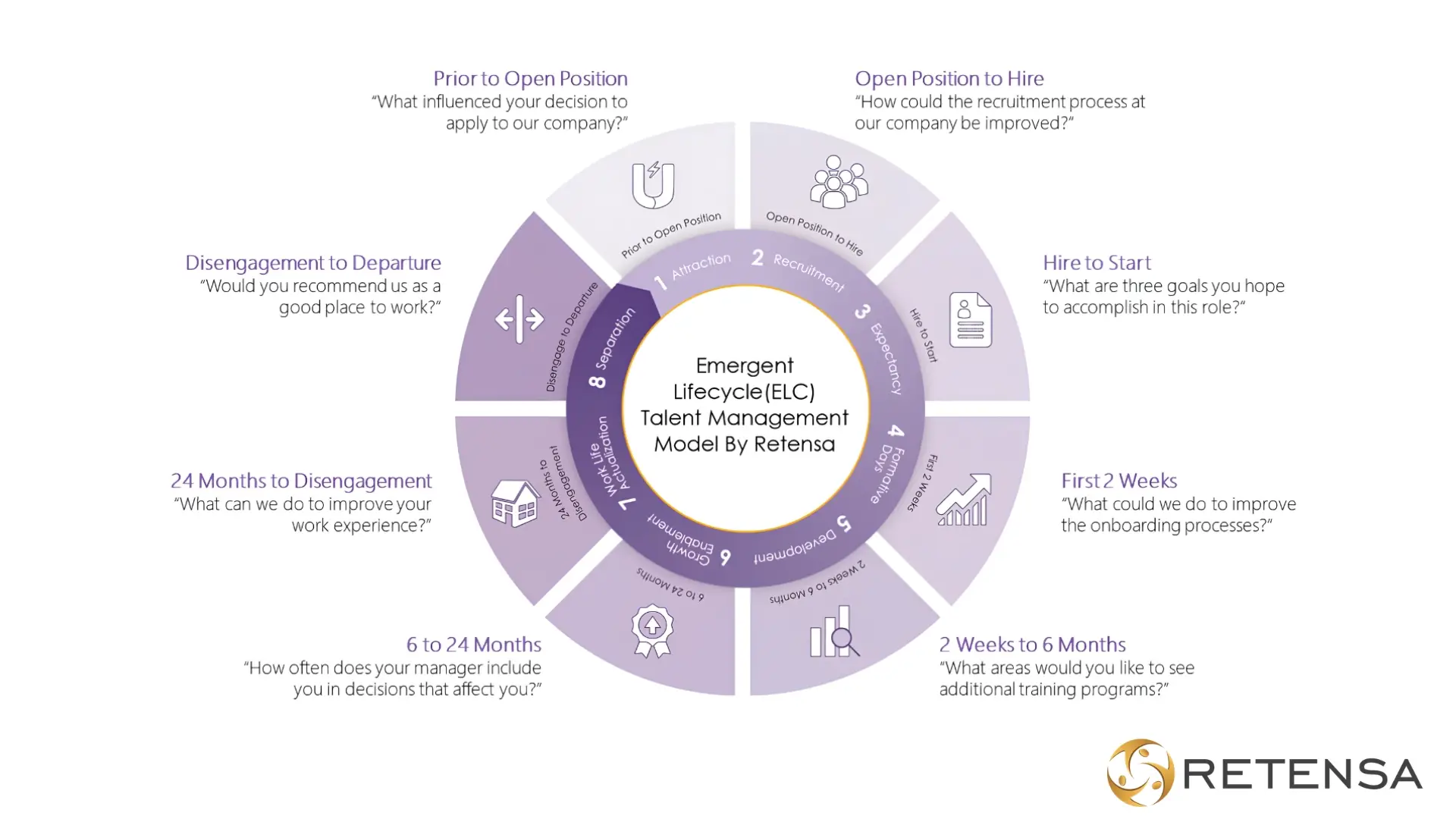
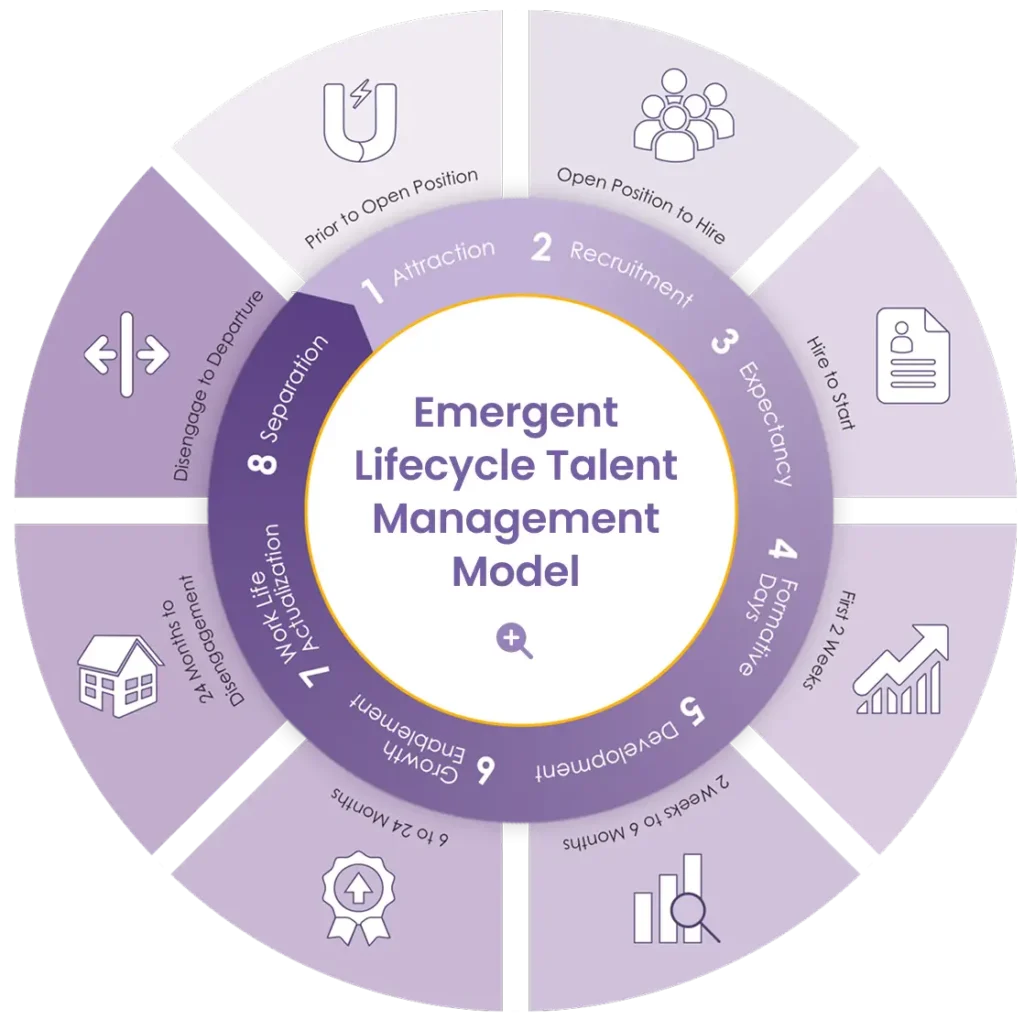
Many systems collect engagement or eNPS. Most lack a structured process to respond to what it reveals. Retensa takes a full employee lifecycle approach to predict and prevent turnover.
TalentPulse AI measures commitment drivers between demographics, departments and roles. It then models changes over time from pre-recruitment to post-separation. Raeya AI maps sentiment polarity and intensity to traceable outcomes, which reveals exactly when and why employees quit. Competitive landscape and best practices connect that data to a prescriptive plan. Each plan is shaped from the employer’s industry, geography, headcount, cultural norms, and current turnover rate.
It works. Retensa has a 98% success rate across 19 industry verticals and 25 years of retention work.
So Retensa backs every plan with a contract-backed retention guarantee. Employers pay nothing if voluntary turnover does not decrease. The guarantee gives CHROs and CFOs a specific, accountable cost to plan around.
Pervasive labor market shortages for skilled talent has made annual surveys and reactive strategies unreliable. No one can wait that long. Real-time diagnostic data and prescriptive action give HR leaders early visibility into risk. Executives have prioritized interventions built from actual employee and manager signals not theories or “how we did it last time”. Employers act before valuable talent quits. All with a precise turnover reduction target % written into the contract.
Frequently Asked Questions
What is employee retention software?
Employee retention software gives HR teams four tools to reduce voluntary turnover. These cover continuous listening, feedback collection, retention-risk identification, and predictive analytics.
How is employee retention software different from HR software?
Traditional HR software focuses on administrative tasks such as payroll, attendance, and employee records. Employee retention software focuses on improving engagement, predicting turnover, and measuring employee sentiment.
What features should businesses prioritize?
The most valuable features include:
- Pulse surveys and engagement analytics
- Predictive turnover insights
- Employee recognition and manager dashboards
- Action planning
- Career development tracking
- Real-time reporting
The right combination depends on your organization’s retention goals.
Can small and mid-sized businesses benefit from employee retention software?
Yes. Large enterprises often have dedicated HR teams. Small and mid-sized businesses face the same high recruitment costs when employees quit. Retention software spots workplace challenges early for organizations of all sizes. Early detection improves employee satisfaction before turnover increases.
How long does it take to see results?
The timeline varies depending on implementation and employee participation. Organizations that actively review insights, involve managers, and follow through on action plans see results fastest. Many notice improvements in engagement and retention as early as a few weeks after changes begin.