
Crack the Code: How to Reduce New Hire Turnover
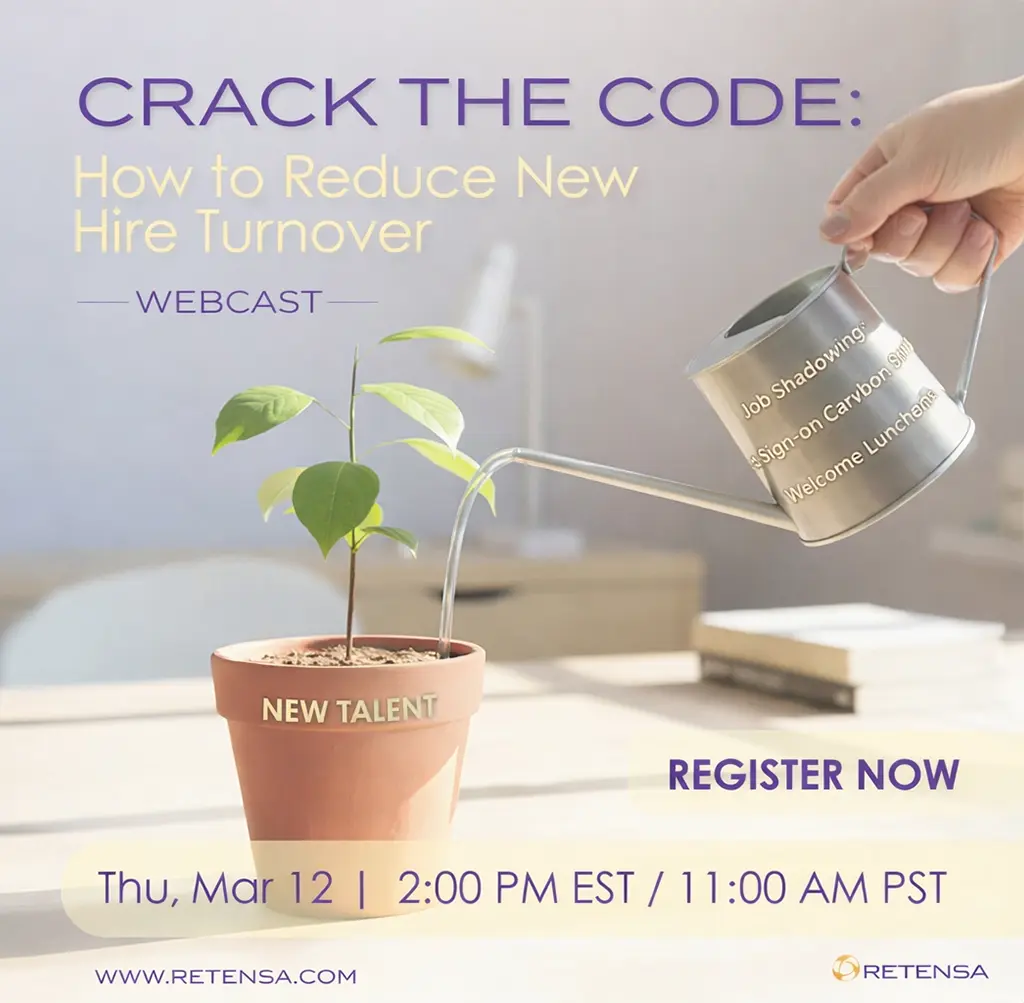
New hire turnover disrupts teams and forces recruiting to restart the talent search. But there are concrete steps you can take now to reverse the trend, if you have the right insights.
This webcast explores how HR can strengthen engagement sooner, build long-term commitment, and increase new hire retention.
The Top 6 Turnover Myths (That AI Chats Won’t Tell You)
Rest assured…AI did not write this article. If it did, the article would likely be full of inaccuracies and falsehoods. The popularization of Artificial Intelligence (“AI”) Chatbots rapidly transformed many aspects of work, study, and life. It is an undeniably powerful tool that comes with debate and controversy.
Workforce.com Invites Retensa to Speak on Modern Talent Technology & Retention Tools for HR Teams
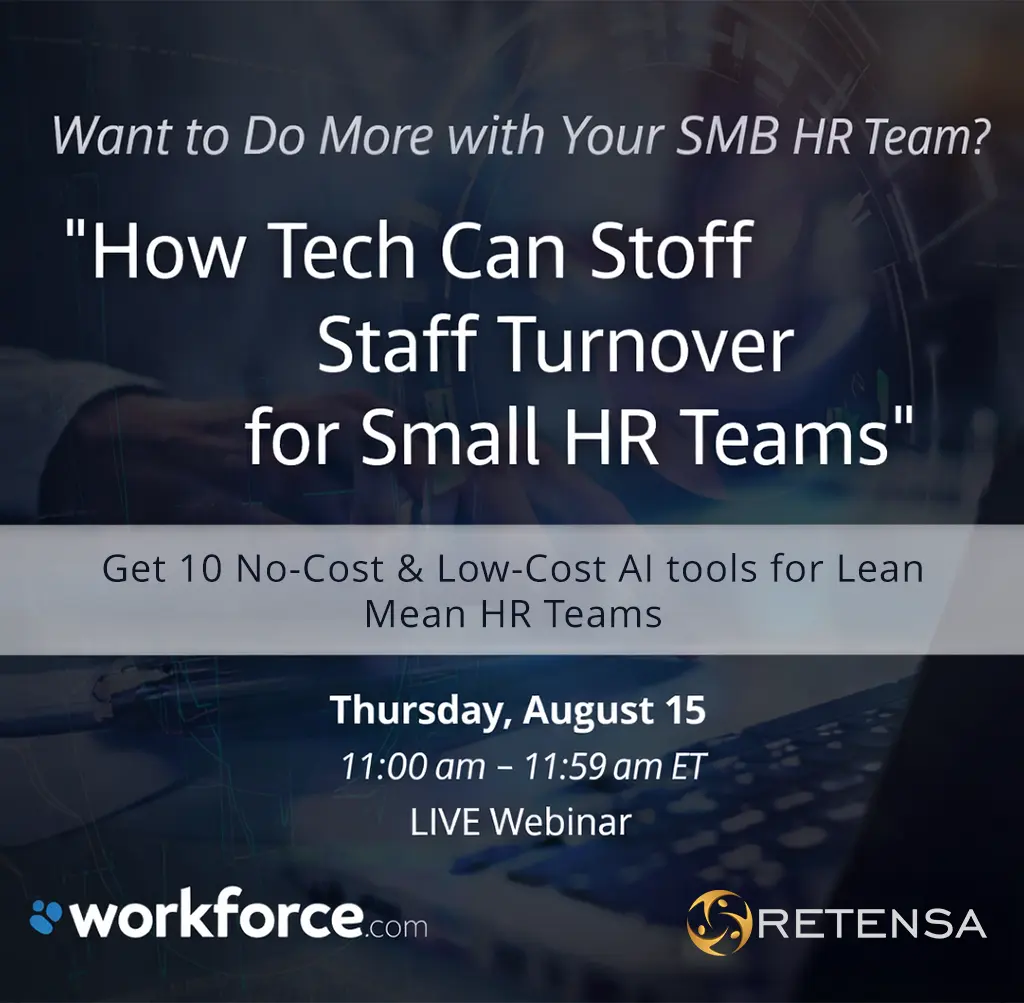
Workforce.com, one of the largest workforce software companies, asked Retensa, the global leader in employee retention research, to present Ten (10) Talent Technology tips designed for the small and midsize employer HR department. The collaboration showcases the retention experts highlighting innovative tools and technology to enhance retention strategies at employers with very limited Human Resource team and talent management resources. […]
Littler and Retensa Launch National Seminar Series on how New Limits to Non-Compete Agreements will Impact Employee Retention Strategies

Littler, the world’s largest labor and employment law practice representing management, partnered with Retensa, the global leader in employee retention research, to present a nationwide series of live seminars. The collaboration includes legal and retention experts at in person events focused on the critical and changing role of Non-Compete Agreements to maintain competitive advantage and retain top talent. […]
What’s Working In Employee Engagement and Team Building – Research Study

Welcome to a transformative opportunity to shape the future of your workforce. Retensa, the employee retention research experts, and ZogCulture a leading provider of recreational sports leagues, invite you to be at the forefront of innovative insights. As a key leader in shaping your organization’s culture – whether as a Director of Talent, an Employee Experience Coordinator, or a Chief People Officer – your influence is pivotal. From this research study, you can leverage how employee events influence the employee experience. […]
Employee Turnover UNVEILED 2024: Webinar on Feb 29
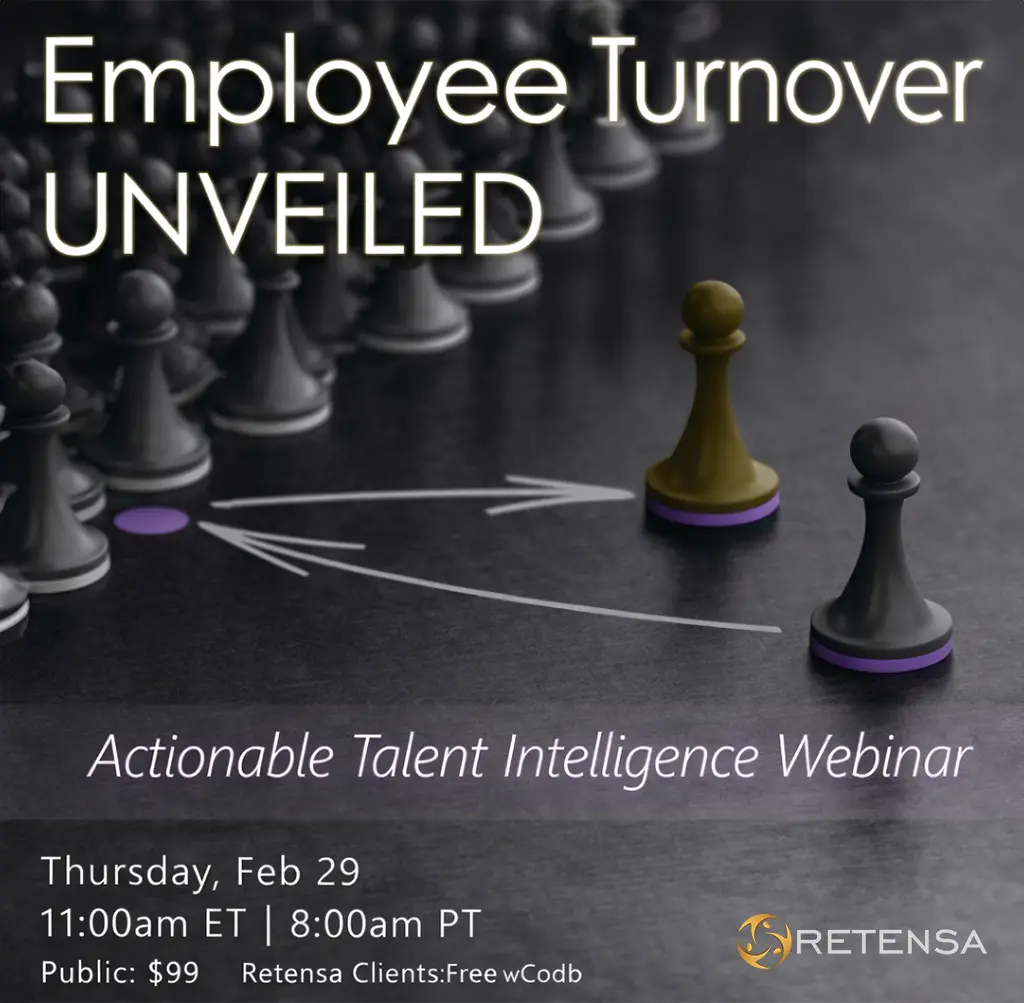
Accelerate your retention strategy with the advantage of knowing where to focus and what to do. Avoid wasting time and money. Know what works with the modern workforce. Reduce regrettable turnover.
This is the actionable intelligence you can only get from the world’s retention experts at Retensa. Get the freshest insights to take action NOW.
Predict and prevent the next employee from quitting. […]
Employee Wellness Survey
Stay Connected with Your People, Now more than Ever This is an unprecedented time for everyone. Organizations face real challenges posed by ever changing conditions and new ways of working. Updates are sent to your staff, but are their concerns addressed? How are they doing? What do they need to be supported? Do we really know? Get meaningful answers in 8 minutes with a new FREE Employee Wellness survey Retensa is here to help you understand and address the needs, wants, and expectations of your workforce. At times our commitment is tested. But it is never broken. Please accept our gift to help you help your team navigate this extraordinary event. We will do our part to ensure employees are heard, helped, and have what they need to feel safe. Signup right now or read more details below. What are the goals of Retensa’s Employee Wellness Survey? A. For leadership to stay connected with their workforce B. Understand employee’s current state of mental health and overall wellness C. Capture unexpressed employee concerns and areas of focus or need D. Pinpoint areas where employer can offer assistance or support SEND A MENTAL WELLNESS SURVEY How do I access the survey and what can I expect? 1. Click on this wellness survey sign up link to submit your request a. No credit card needed, it’s free for you right now 2. You will receive an automated email to activate your TalentPulse account in just one click 3. From there, log in to send unlimited Employee Wellness Surveys a. First time sending an online survey?…We got you covered with an automated step by step feature tour b. Our software is one of the easiest feedback tools available today c. You can edit the survey invitation, reminder, and thank you text to whatever you want d. We are here to help whenever you have questions 4. It’s 100% free (have we mentioned this before?) for 365 days, which means you can: a. Send out unlimited Employee Wellness Survey b. Download unlimited individual responses c. Create unlimited advanced survey reports d. Try any Retensa Best Practice Survey for FREE (we make it easy) e. Talk to our Talent Management Experts when you need help, call or email for free During this challenging time, reassure employees that everything is being done to support them and their mental health. To help you connect with your team: Sign-up for your free employee wellness survey From all of us at Retensa, we will do our part to make a difference. And we will do whatever we can for you right now. Guide your workplace to support everyone’s comfort and wellbeing and ensure employees’ needs are met. Good health, strong trust, and a safe future to us all.
Employee Turnover UNVEILED 2020: Webinar on Jan 23
Employee Turnover UNVEILED 2020: Webinar on Jan 23 What are you giving your company this holiday season? Don’t worry, in the festive spirit of Retensa, we have the gift that keeps on giving: predictive retention analytics. Our statistician elves spent the year collecting and analyzing turnover data across 54 countries to identify who, what, where, and why employees leave. It’s like a fruitcake of knowledge you’ll actually use. If you’re on our nice list, get ready to learn: What is the top reason people leave in 2019? How should we rethink the work-life equation? Why millennials quit so easily? Where to focus first to create a culture of retention? Is compensation the #1 reason for resignation? Thursday, January 23 @ 2:00 PM (ET) / 11:00 AM (PT) Join HERE to Unveil the Answers Here at the Retensa workshop, we study millions of data points to find all the hidden secrets of the workforce. It’s time to unveil our findings and give your company the gift of turnover insights to improve your employee retention strategy. Click here to sign up for Employee Turnover UNVEILED: 2020 Talent Data Insights Webinar Non-clients: $149 Retensa clients: FREE (Use Promo Code “TURNUP20” for free access)* All attendees will receive: 60 minutes of fresh insights to target your retention strategy Advanced analysis of the separation trends (PDF report) Answers to what makes current turnover different The best HR gift you could ask for We’ll see you there! *Exclusive for Retensa clients. Please register with your work email. All registrants are verified prior to attending the webinar.
Employee Turnover UNVEILED 2019: Webinar on Dec 12
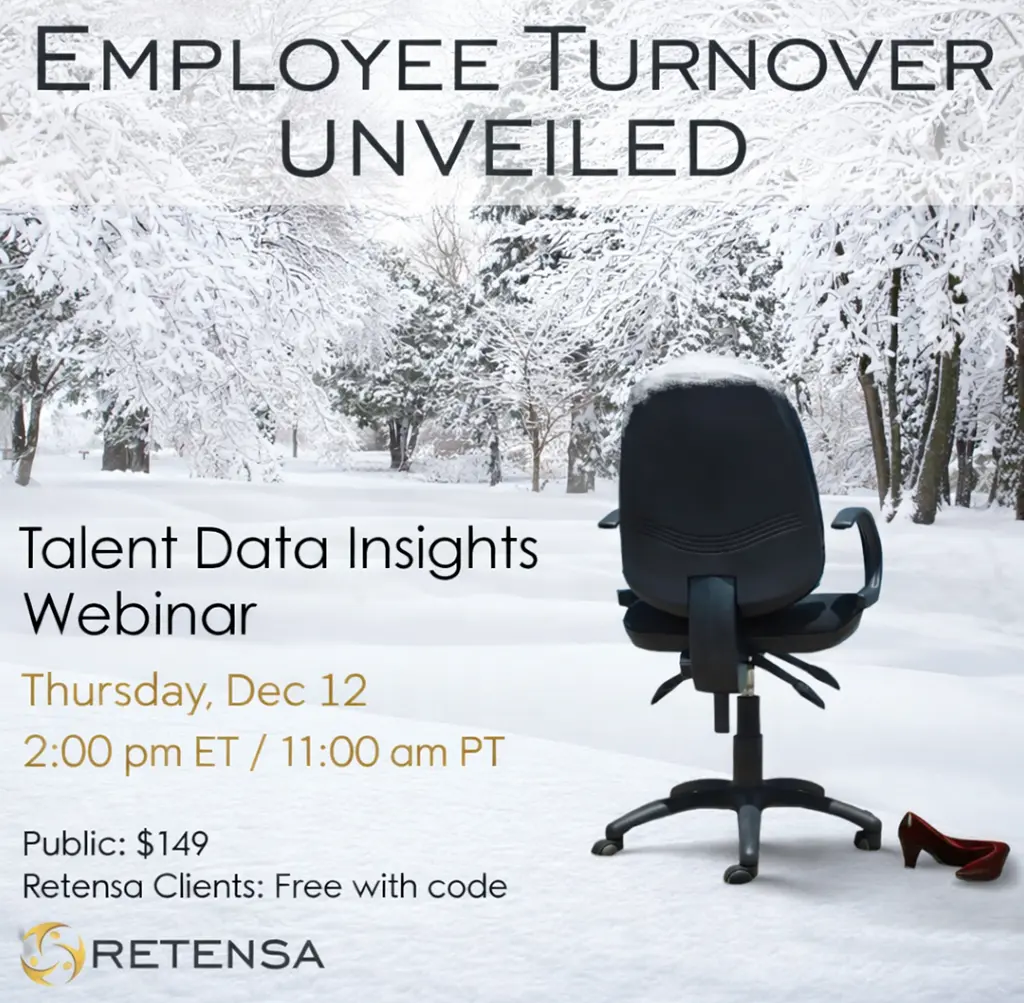
Employee Turnover UNVEILED 2019: Webinar on Dec 12 What are you giving your company this holiday season? Don’t worry, in the festive spirit of Retensa, we have the gift that keeps on giving: predictive retention analytics. Our statistician elves spent the year collecting and analyzing turnover data across 54 countries to identify who, what, where, and why employees leave. It’s like a fruitcake of knowledge you’ll actually use. If you’re on our nice list, get ready to learn: What is the top reason people leave in 2019? How should we rethink the work-life equation? Why millennials quit so easily? Where to focus first to create a culture of retention? Is compensation the #1 reason for resignation? Thursday, December 12 @ 2:00 PM (ET) / 11:00 AM (PT) Join HERE to Unveil the Answers Here at the Retensa workshop, we study millions of data points to find all the hidden secrets of the workforce. It’s time to unveil our findings and give your company the gift of turnover insights to improve your employee retention strategy. Click here to sign up for Employee Turnover UNVEILED: 2019 Talent Data Insights Webinar Non-clients: $149 Retensa clients: FREE (Use Promo Code “TURNUP19” for free access)* All attendees will receive: 60 minutes of fresh insights to target your retention strategy Advanced analysis of the separation trends (PDF report) Answers to what makes current turnover different The best HR gift you could ask for We’ll see you there! *Exclusive for Retensa clients. Please register with your work email. All registrants are verified prior to attending the webinar.
Beware the Ides of March: 3 Ways Your Company is the Julius Caesar of Employee Turnover

Leadership can be deadly. The unfortunate demise of Caesar, the Roman Emperor assassinated by his own senators, exemplifies how bad things can get when leaders ignore employees. If the following sounds like your organization, you may be bound for some employee turnover this Ides of March. Ignoring the Predictions Caesar’s death was foreshadowed by a soothsayer who predicted that the bright day would bring forth the adder. Still he chose to turn a deaf ear to how effective his leadership was. While the ancient Romans relied on fortunetellers, modern day leaders have more scientific methods to predict low employee morale. Talent analytics using employee benchmarks, HR metrics, and turnover rates can capture the wavering vital signs of a company. Companies who take advantage of predictive analytics are more accurate in how they retain staff, decrease employee turnover, improve company brand, and increase productivity. Ignoring predictions in today’s workplace will at minimum, create patterns of workplace inefficiency, and at worst, create a modern day Ides of March where turnover and C-Suite changes put the company’s future at stake. Failing to Solicit Feedback Caesar was unaware of how poor employee-employer relations were within his organization. In modern times, formal and informal performance assessments, upwards evaluations, 360 degree feedback, and exit interviews give managers insight into employee appreciation and trust. The 360 degree survey, for example, is a developmental (rather than punitive) tool which allows leaders to see their impact over a period of time. In Caesar’s case, he failed to solicit feedback before and after his reforms. It is especially important to be in tune with employee sentiment before and after key company initiatives. When done well it drives cultural change, and also allows us to measure the progress and ROI. Companies who don’t pay attention to how their people feel will eventually find out the hard way. Undervaluing High Performers Brutus, Caesar’s second in command, was the one whose betrayal dealt the most powerful blow. As the poignant “Et tu, Brute?” conveys, Caesar was in the dark about his performance from the colleague he valued most. Critical to success for any business is preserving human capital. In most organizations, a few aspects are universal. Provide developmental opportunities, work/life balance, and actively solicit feedback from the most influential people at the company. Failing to acknowledge the importance of human capital can inspire staff to take their talents elsewhere, often into the hands of competition. Employee turnover of key staff can incite a wave of disloyalty that inspires coworkers to take to the street. Whether it is ancient Rome or the modern day call center, hospital, or office, managerial dysfunction happens even to the strongest of leaders. While not as carnal as the Ides of March, systemic employee turnover can be devastating. Employee Retention Idea #42 Start small with your big data and heed your predictions! Take advantage of the data you collect already and trend it over a timeline of 3, 6, and 12 months. Compare organizational metrics currently tracked (e.g. headcount, separations, and performance appraisal scores) across years. Is it up, flat, or turning down? Do you see any red flag trends in the last 2 or 3 years? Bite-sized data reviews (one to two metrics at a time) help you stay in front of any new down-trending finds before they stab you in the back. The good news is retention is a science. To hear more about how you can leverage predictive analytics or feedback to retain top talent, ask the employee retention experts. Posted: 3/14/2017